
Emergency
Roof Leaking Right Now? What to Do in the First Hour
Roof leaking right now? Catch the water, stay off the roof, take photos, and call a roofer to cover it. Hot Springs crews answer 24/7 at 501-359-5550.
What should you do first when the roof is leaking?
Catch the water, protect what is under it, and stay off the roof. Then take photos and call a roofer who can cover the roof. Those four steps limit the damage inside your house, and they give your insurance company what it needs later.
Do them in this order.
- Catch the water. Put a bucket or a pan under the drip. Lay a towel in the bottom to stop the splash.
- Move what water ruins. Pull furniture, rugs, and electronics out from under the wet spot.
- Keep away from wet wiring. If water runs near a light or an outlet, keep away from it. The CDC says to shut off power at the main breaker if you can reach it without standing in water, and never to turn power on or off while you are standing in water.
- Take photos. Get the ceiling, the floor, and anything that got wet.
- Call a roofer. Tell them water is coming in right now. We answer 24 hours a day at 501-359-5550.
What should you do about a bulging ceiling?
Stay out from under it. A bulge means water has pooled on top of the drywall, and wet drywall can let go without warning. If you have to drain it, the American Red Cross says to start at the outer edge of the bulge, never the center.
Their flood guidance is specific. Wear eye protection and a hard hat, use a long stick, and stand away from the wet area. Poke holes starting at the outside of the bulge so the water drains slowly. A hit in the middle can bring the whole section down at once.
If you are not sure, close the door to that room and wait for help.
Why should you stay off the roof?
Because a wet roof is how people get hurt. The National Roofing Contractors Association tells homeowners to check a roof from the ground only. The Asphalt Roofing Manufacturers Association is just as direct: property owners should never climb onto a roof.
Here is what you can safely check, and what to leave alone.
| What you see | What it likely means | What to do now |
|---|---|---|
| Steady drip in one spot | Water has found a path through | Bucket, photos, call |
| Ceiling bulge | Water pooling on drywall | Stay clear, drain from the edge |
| Water near a light or outlet | Wet wiring | Keep away, tell the roofer |
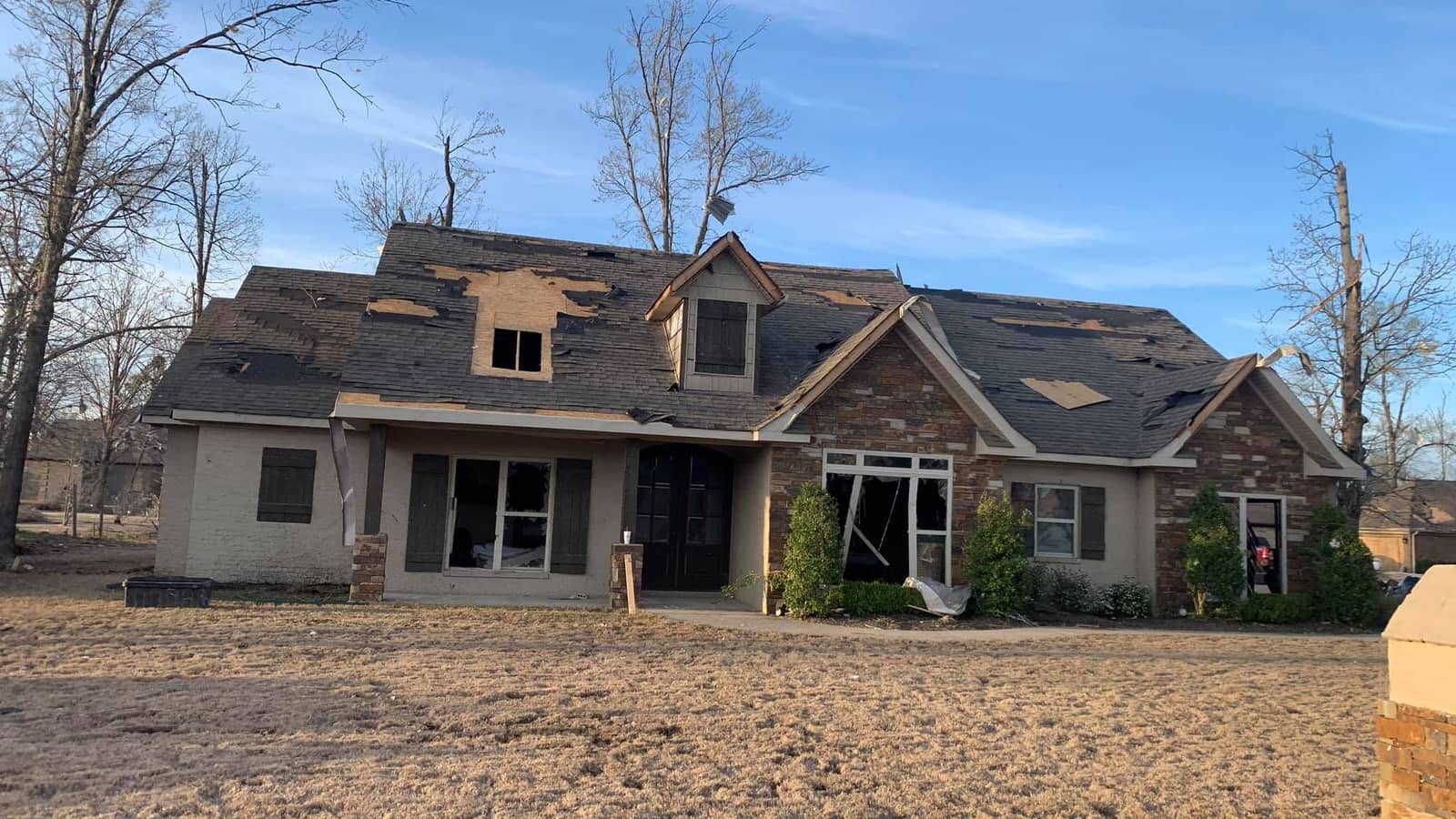
| Shingles in the yard | Wind tore the roof open | Photos from the ground, call |
| A limb on the roof | Possible hole in the decking | Stay out of that room, call |
Who should put the tarp on?
A crew, once it is safe. A tarp keeps rain out until the real repair can happen, but it is not a repair. OSHA tells roofing crews never to install a tarp during a storm while it is windy or raining, and never to walk on one.
We can often tarp a roof the same day. No one should be on a roof in lightning or high wind, so in a live storm we come as soon as it is safe. Until then, the bucket is doing the job.
What should you save for the insurance company?
Save photos, receipts, and the damaged material. The Arkansas Insurance Department tells homeowners to cover leaking roofs, take photos or video, and keep every receipt, including the ones for temporary repairs. It also says not to make permanent repairs until the insurer has inspected and you have agreed with them on the cost.
The same department gives one more warning after storms. Avoid any contractor who offers to waive your deductible or promises a rebate.
We photograph the damage, and we can meet your adjuster on the roof. See how roof insurance claims work here.
What happens after the water stops?
The leak gets traced and repaired. Water rarely comes in where the stain shows, so we follow it back to the real opening. Then you get a written price before any repair starts.
Some leaks are a small fix. That is a roof leak repair. A roof that took a real hit needs storm damage repair. If you have a metal roof, our guide on how to find a leak in a metal roof shows where to look.
Who do you call in Hot Springs?
Call us at 501-359-5550. We answer 24 hours a day, seven days a week, and active leaks go to the front of the list. Our own crews do the work. We are at 207 Albert Pike Rd in Hot Springs and have roofed Garland County for over 20 years.
Read more about emergency roof repair, or contact us if the roof can wait until morning.
Where this advice comes from
- American Red Cross: safety steps for returning home after a flood
- Arkansas Insurance Department: post-storm tips for consumers
- OSHA fact sheet on roof tarping
- National Roofing Contractors Association: storm guidance for owners
- Asphalt Roofing Manufacturers Association: spring roof inspection
- CDC: protect yourself from electrical hazards
Frequently asked questions
What is the first thing to do when a roof leaks?
Catch the water and move what it can ruin. Put a bucket under the drip, pull furniture and electronics out of the way, and stay off the roof. Then take photos and call a roofer. In Hot Springs, we answer the phone at 501-359-5550 at any hour.
Should I poke a hole in a bulging ceiling?
A bulge means water is pooling above the drywall. The American Red Cross says to let it drain slowly from the outer edge of the bulge, not the center, because a hit in the middle can bring the ceiling down. Wear eye protection and a hard hat, use a long stick, and stand clear.
Can I tarp the roof myself?
We do not recommend it. A wet roof is slick, and OSHA tells roofing crews never to install a tarp during a storm while it is windy or raining. Contain the water inside the house and let a crew cover the roof once it is safe to be up there.
Will insurance pay for an emergency roof repair?
It may, if a storm caused the damage. The Arkansas Insurance Department tells homeowners to cover leaking roofs, take photos or video, keep receipts for temporary repairs, and hold off on permanent repairs until the insurer has inspected and agreed with you on the cost. Your adjuster decides what is covered.