Arkansas Hail Season: What Hot Springs Homeowners Need to Know
Arkansas hail season is real, it's predictable, and it catches homeowners off guard every year. Hot Springs and the surrounding Ouachita Mountain region sits squarely in what meteorologists call the central Arkansas hail corridor — where warm, moist Gulf air collides with cold fronts pushing down from the north through April and May. The result is some of the most damaging hailstorms in the mid-South, and roofs take the worst of it.
At Speedy Gonzalez Roofing, we've been inspecting and repairing hail-damaged roofs in Hot Springs, Hot Springs Village, and Malvern for over 20 years. This guide tells you when hail season peaks, what damage looks like, what to do immediately after a storm, and how to navigate the insurance claim process without getting shortchanged.
When Hail Season Hits Arkansas
The primary hail season in Arkansas runs from March through June, with April and May being the most active months. This is when the atmospheric conditions that produce large hail are most common — unstable air masses, strong updrafts, and the frequency of severe thunderstorm systems moving northeast across the state.
Hot Springs sees a secondary hail risk period in September and October as fall storm systems move through. These tend to produce smaller hail than spring events, but even quarter-size hail causes granule loss on asphalt shingles and can dent metal panels. Over time, that granule loss accelerates shingle wear and shortens roof life significantly even if no immediate leaks develop.
The Ouachita Mountains around Hot Springs can actually intensify storms. Air masses that interact with terrain elevation can strengthen updrafts, producing hailstones that are larger than what the same storm would produce on flat terrain. Homeowners in elevated neighborhoods around Hot Springs — particularly those on Ouachita Mountain, West Mountain, and Hot Springs Mountain — have seen this firsthand. Hot Springs Village, surrounded by the Ouachitas, sees similar dynamics.
What Hail Damage Actually Looks Like
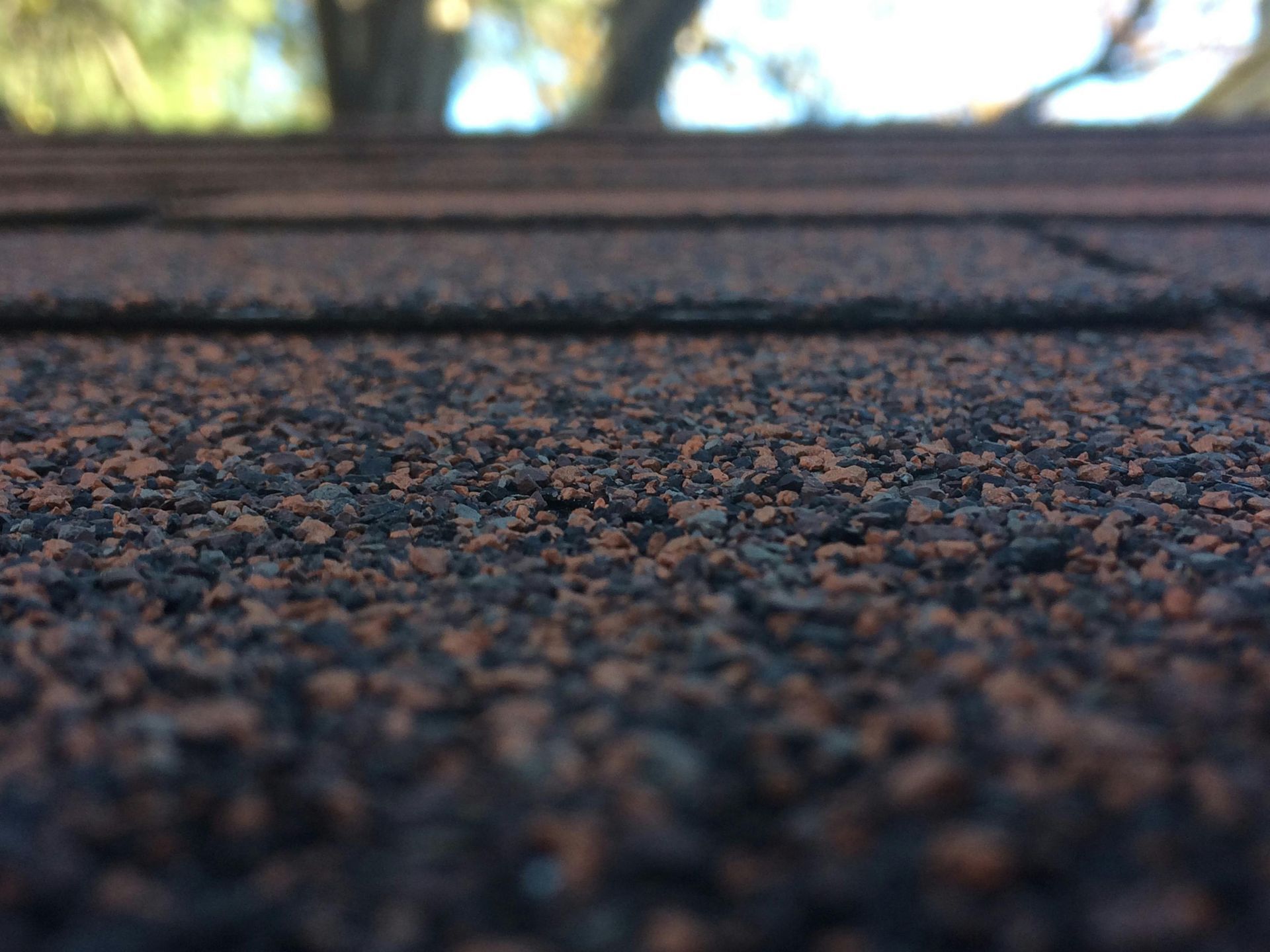
This is where most homeowners get confused. Hail damage to asphalt shingles doesn't always look like obvious holes or cracks. The most common form of damage is granule loss — the small mineral granules that coat asphalt shingles get knocked loose by hail impact, leaving darker, exposed asphalt spots on the shingle surface. These spots are visible from the ground on some roof pitches, but on lower-slope roofs they're only visible during an up-close inspection.
The most reliable early indicators of hail impact aren't on the roof at all — they're on your gutters, downspout screens, and air conditioning condenser unit. These soft metal surfaces dent easily and hold the impact pattern clearly. If you see circular dents on your AC unit or gutters after a storm, your roof almost certainly took hits too. Check your window screens and wood trim as well — hail bruises on painted wood and punctures in aluminum screens are consistent indicators.
On the roof itself, look for dark circular or irregular spots where granules are missing, soft spots or bruising on the shingle surface (best detected by running your hand across the shingle), cracked or split shingles, and damage to any flashing, ridge caps, or vents. Metal roofing will show denting. TPO and flat roofing systems can show surface abrasion or membrane punctures from large hail.
Important: Don't climb on your roof after a storm to investigate. Wet shingles are slippery, damaged areas may not support weight, and anything you do on the roof before a professional inspection could affect your insurance claim. Call us at 501-701-8766 for a free storm damage inspection — we'll get up there safely and document everything.
What to Do in the 24 Hours After a Hailstorm
The first 24 hours after a significant hail event are the most important for protecting your claim and your home. Here's the right sequence.
Document from the ground. Walk your property and photograph any visible hail damage — dents in gutters, AC units, window screens, siding, fencing, and any shingles visible from the ground. Note the date and time. This establishes your damage baseline before any further weather events.
Check your attic. If you have accessible attic space, check for any daylight coming through or signs of moisture. In severe hail events, large hailstones can crack shingles enough to allow water entry. Finding this early prevents ceiling damage.
Call a local roofing contractor before calling your insurance company. This order matters. A professional inspection gives you an independent, documented assessment of the damage before your insurance adjuster arrives. Adjusters work for the insurance company — having your own documentation means your claim reflects what's actually on your roof, not what the adjuster has time to find. We provide free hail damage inspections and written documentation for Hot Springs area homeowners.
File your claim promptly. Most Arkansas homeowners policies require hail damage claims to be filed within one year of the event. Don't wait. The longer you delay, the harder it is to establish that the damage is from a specific storm event rather than general wear.
Navigating the Insurance Claim Process
Hail damage claims are among the most frequently underpaid homeowner insurance claims. The reasons vary — adjuster time constraints, conservative damage standards, missed items — but the result is the same: homeowners get a claim payment that doesn't cover the actual cost of proper repair or replacement.
Having a professional roofing contractor present during or immediately before the adjuster's visit makes a significant difference. We know what storm damage looks like, we know what adjusters are looking for, and we know how to document damage in a way that supports an accurate claim. We've helped hundreds of Hot Springs area homeowners navigate this process.
Be aware that storm chaser contractors — out-of-state companies that flood the area after major hail events — often promise to handle your entire claim and then disappear before the work is properly completed. Use a local contractor with a verified physical address, a track record in the community, and no requirement for full upfront payment. We've been at 209 Albert Pike in Hot Springs for over 20 years. We're not going anywhere.
Hail-Resistant Roofing Options for Hot Springs Homeowners
If your roof has taken multiple hail hits or you're due for a replacement, this is an opportunity to upgrade to materials that will hold up better in future storms. Impact-resistant shingles — rated Class 3 or Class 4 under UL 2218 testing — are significantly more resistant to hail damage than standard shingles. Many Arkansas insurance companies offer premium discounts for Class 4 impact-resistant roofing. Ask your agent before choosing materials.
Metal roofing is also worth considering for homes in areas with frequent hail exposure. Standing seam metal roofs handle most hail events without functional damage, though large hail can leave cosmetic denting on some panel profiles. The lifespan advantage — 40 to 50 years versus 15 to 25 for asphalt — combined with the reduced claim frequency makes metal a strong long-term value for Hot Springs area homeowners who have dealt with repeated hail events.
We can walk you through both options, show you material samples, and give you a side-by-side cost comparison for your specific roof. Call 501-701-8766 or request a free estimate online.
Frequently Asked Questions
How do I know if my roof has hail damage?
The most reliable early indicators are dents on your gutters, AC condenser unit, and window screens. On the roof, look for dark circular spots where granules are missing on asphalt shingles, or denting on metal panels. Don't climb your roof — call us for a free inspection at 501-701-8766.
Does homeowners insurance cover hail damage in Arkansas?
Most standard homeowners policies in Arkansas cover hail damage as a covered peril. Coverage limits, deductibles, and actual cash value vs. replacement cost provisions vary by policy. File promptly — most policies have a one-year window from the damage event for hail claims.
How long does hail damage take to show up as a leak?
It varies. Severe hail that cracks shingles may cause immediate leaking. More commonly, granule loss from hail impact accelerates shingle deterioration over months to years, eventually leading to leaks. This is why a professional inspection after hail events matters — damage that doesn't leak immediately can be documented and claimed before it becomes a major problem.
Can I file a hail damage claim years after the storm?
Generally no. Most Arkansas policies require claims within one year of the damage event. Some policies have shorter windows. Don't wait — if you suspect your roof took hail damage in a recent storm, call for a free inspection now.
What's the difference between a Class 3 and Class 4 impact-resistant shingle?
UL 2218 rates shingles from Class 1 to Class 4 based on their resistance to steel ball impact testing. Class 4 is the highest rating and represents the best hail resistance available in asphalt shingle roofing. Many Arkansas insurance carriers offer 20-30% premium discounts for Class 4 roofs. Ask your agent before your next replacement.
We serve Hot Springs, Hot Springs Village, Malvern, Benton, Bryant, Jessieville, and surrounding areas. Call 501-701-8766 for a free estimate — 7 days a week.
Speedy Gonzalez Roofing is a licensed roofing contractor serving Hot Springs AR and central Arkansas. We specialize in roof repairs , shingle roofing , metal roofing , TPO roofing , gutters , siding, hail damage , and storm damage repair. AR Roof License RR0540931024. Free estimates. No payment until the job is done.